
MAIMS FIRST NATIONAL MOOT COURT COMPETITION, 2020!
Recently, Russia had declared a state of emergency after 20,000 tonnes of diesel oil spilled from power plant fuel leak into Ambarnaya river, which has turned its surface crimson red. The Ambarnaya river, into which the oil got spilled is part of a network that flows into the environmentally sensitive Arctic Ocean. The leak may have a serious impact on the local ecology as the Ambarnaya river flows to the Pyasino lake and river Pyasina, which connects it to the Kara Sea, a part of the Arctic Ocean. The region is rich in salmon, seals, sea otters and sea birds and fishing is impossible now in the region.
How did it happen?
Environmental groups have blamed a Russian mining firm of emphasising the role of global climate change in last week’s historic oil spill in part to avoid punishment for its ageing infrastructure and potential negligence in the accident. The spillage occurred in Russia’s Krasnoyarsk Region where the power plant is located near the Region’s Norilsk city, around 3000 km northeast of Moscow. The thermoelectric power plant is built on permafrost region, which has weakened over the years due to climate change. This weakening caused the pillars that supported the plant’s fuel tank to sink, leading to a loss of containment of oil. After the spillage around 20,000 tonnes of diesel oil was released into the Ambarnaya river, which has drifted 12 km on its surface till now.
How bad is the damage?
The accident had been compared by Greenpeace to the Exxon Valdez spill and is one of the largest in Russian history and . The adverse impacts of the oil spills can be summarised as—
The oil spills are also disastrous for the biodiversity and environment:
How is an oil spill tackled ?
Booms and skimmers are used, although they don’t work well in high winds. A solidifying agent can be used to turn the spilled oil from liquid to solid so that it can be removed more easily. Machinery is used to pick up coagulated oil from the beach. A vacuum can be used to draw in water from the site and a centrifuge can then separate the oil from the water. These are capital-intensive processes. Dispersants can be used to turn the oil into water-soluble micelles that are rapidly diluted. However, they are shown to increase the toxic hydrocarbon levels in fish by up to 100 times.Bioremediation can be used to break down the oil. The bacteria like Alcanivorax and Methylocella silvestris etc. break down the oil. The natural bio-degradation can be speeded up by adding nutrients. In the future, with genetic engineering, scientists can come up with a variety of biological agents adept at bioremediation.
In 2016, Indian scientists invented an ultrahydrophobic (water repallant) and extremely oleophilic (fat-loving) membrane that could potentially be used to clean up oil spills. The membrane was recyclable, worked using gravity, even in strong water currents. Last year, IISER scientists used marble-sized wood pulp balls to absorb the oil. the small balls of cellulose and dipped them in a solution of the gelator could absorb oil 16 times their own weight.
In both these methods, the oil can be recovered later by application of ultrasonic waves and distillation respectively.
-KRITI SAKUJA
SYNOPSIS:
This article highlights the future of virtual courts in India and what are the pros and cons of adopting e court system in the Indian scenario. This article also covers the need for a systematic and scientific approach for successful integration of technology in the judicial framework of India.
Introduction
COVID- 19 brought a paradigm shift from physical hearings to virtual courts in the Indian Legal system. Unlike few months ago when the e- courts system seemed audacious, today, we have successfully addressed a key concern to the judicial system i.e. technology and optimization of court processes. This can be regarded as a turning point in the history of Indian Judicial System with an immense increase of innovation and resolution to some long standing issues.
Over the last decades Indians have embraced technology in a greater way than ever before, with development of online shopping apps to the concept of ‘work from home’, in these exceptional circumstances, the question that poses in the minds of every advocate and judicial person is that why can we not use technology to ensure speedy disposal of cases?
E – Courts are a kind of subset to virtual courts as they refer to the websites and components used to facilitate the functioning of the courts. India is moving forward to this system as an E – Courts Project has been launched on the basis of “National Policy and Action Plan for Implementation of Information and Communication Technology in the Indian Judiciary- 2005.” The vision behind the project is to initiate the implementation of Information and Communication technology in the judicial system for the first phase. It was carried on by providing laptops, computers, required software and hardware, digital signatures to judges and internet.
In the second phase a common software platform was developed known as Case Information Software with which all the court data is uploaded on the website for easy access. On July 26th, 2019 Delhi’s first virtual court was launched at Tis Hazari and following that on August 17th, 2019 the Punjab and Haryana High Court also introduced the same to deal with traffic challan cases.
The procedure aids to expedite disposal of cases and reduces footfall of the court.
Economic Survey of 2019-2020 mistakenly argues for more court infrastructure, on the contrary, existing infrastructure is grossly underutilized. The court system at present requires the advocates from both sides to be physically present in the court and often the cases are adjourned. In such a scenario a virtual court system will pave way to easily access to justice. Not only will it result in substantial savings in the cost but also a speedy disposal of cases. This can surely help in increasing the productivity of lawyers as in regard to the metropolitan cities the traffic on roads is time killer for various advocates. They have to travel court to court for hearings and so at times they are unable to reach the court in time which results in further delay of the matter put up.
But like every coin has two sides, virtual court system cannot be completely adopted in the system. One of the reasons is; it is imperative that free and fair administration of justices is not disrupted. The principle of Open Court is said to be disregarded in virtual hearings. The open court principle presumes that public and media have free and fair access to court proceedings. With its foundation in the principle of freedom of speech and expression it protects a wide scope of activities which enables the public to attend court hearings as a spectator, reporter or partaker. In the case of Naresh Shridhar Mirajkar and Ors. V. State of Maharashtra and Ors., the Supreme Court recognized the importance of this principle as it serves a check against judicial caprice and serves as a powerful instrument for creating confidence in fairness and impartial administration of justice. But this drastic technological advancement has disregarded this principle to some extent as there does not exist an exhaustive digital literacy and training of all judicial officers.
Another problem that is posed in adopting such a system is the demeanor of witnesses and false evidence as a video conference cannot lead in discovery of truth fairly. In recording testimonies and conducting evidence through video conferencing the physical oath taking cannot be undertaken efficiently. In regard to the criminal punishment the communication of degree of censure and condemnation of the crime deserves to be done to the public at large in order to add deterrent value but such communication via video conferencing does not seem to be a feasible option.
Another concern is the lack of confidence that litigants may have as disclosing of personal or financial information online without proper supervision can be harmful as the chances of divulging of such information increases.
Thus such quick adoption of virtual courts raises some serious and complex concerns.
VIEWS OF SOME EMINENT JUDGES ON ADOPTION OF VIRTUAL COURTS:
Current CJI SA Bobde discussed the implementation of video conferencing in courts to avoid any type of gathering in Court premises and minimize the impact of COVID-19 outbreak in the functioning of the judiciary. Justice DY Chandrachud announced the e-filing of matters which is available 24/7. He stated that between 2017 – 2020 Internet penetrations in India has risen from 437 million to 564 million and it is expected that by 2020 it will rise to about 600 million people. Quoting figures from TRAI he said that the internet density in India stands at 52% while in villages only 27% people have access to internet and 25.3% people have smart phones, so the question that arises is how e-courts will help these people who don’t have access to robust technology and infrastructure. Therefore he said “technology must be used for inclusive justice”. Justice Chandrachud also spoke on how digitization of case records and proceedings will not violate one’s right to be forgotten. He said he had dealt with this “philosophical question” in his dissenting opinion on Aadhaar, but the same was not the law of the land. Even now, he said, judgments were being uploaded on the Supreme Court’s website.
In the Vidhi’s JALDI Consultation on virtual courts held on April 25, 2020 some eminent judges and advocates discussed upon the ongoing use of Zoom and other video conferencing apps. The need of unique software for court proceedings was an important matter which was discussed at the meeting. The conversation also explored on how the E courts project can be given an ensured judicial oversight. The virtual courts was said to be an extremely useful means to embrace the fact that courtrooms are not the only viable institution for dispute resolution.
CONCLUSION:
The adoption of e courts in India requires adoption of a design thinking approach as there are a large number of cases which are mechanical in nature and thus require a mechanized approach too. It is important for the younger advocates to become the vanguard of the transition to virtual courts which can result to an effective e court system. But another aspect that cannot be disregarded is that India’s internet density stands at only 52%, with the maximum population residing in rural areas, e courts cannot be a feasible option for those people. Hence, a well planned outline is required to successfully implement virtual hearings in Indian setup and physical hearings cannot be totally terminated at any point.
-DEEKSHA CHUGH
The Indian sub-continent is witnessing a explosive rise within the incidents of hate crimes in modern times. Incidents beneath this typically involve violence against a private or a bunch, of a selected group of people , by mobs, chiefly on non secular matters, that produce turmoil within the overall social organization. intended by hate and biased mentality hate crimes are typically aimed toward giving a message to a selected cluster of society to introduce in them worry and create an announcement.
According to the Organization on Security and Co-Operation in Europe (OSCE). Hate crimes are criminal acts committed with a biased motive. conjointly referred to as a “bias-motivated crime” or “bias crime” they’re not outlined as a legal offence however they occur once a offender targets a victim of a specific grouping.
Hate crime refers to criminal acts that are impelled by biasness against a private or grouping attributable to bound variations, majorly in their non secular practices and customs. In modern times its meaning has proliferated on the far side murder, discrimination and offensive speeches and currently encompasses speech that’s insulting, derogative or incites and violence. All of this ends up in worrisome harmony and order in society at giant. It affects its victims drastically and that chillingly affects him/her each mentally and physically, leading to his/her mental and physical dilapidation.
To determine whether or not a criminal offense could be a hate crime or bias crime, the motivation behind the act is to be taken into consideration. A hate crime is often actuated, by bias or hate of an individual or grouping against another person or grouping due to variations arising out of race, religion, ethnicity, customs, practices and also the like. It’s a psychological and emotional impact that extends the way on the far side of the victim.
Attacks that actually supported such biases conjointly undermine the person’s rights given to him by virtue of being born as an Indian national.
Thus, in totality Hate Crimes might be outlined as an attack on a person’s rights entrusted to him thereby affecting not solely him but the social system as an entire that in some ways makes it more heinous than several different Criminal Offences.
Nature of Hate Crime
1) Hate Crimes although totally different in nature are often supported against the law that is penal and thus imposes some type of penalisation. This makes hate crime an offence below the domestic legal code and enunciates its criminalism.
2) A hate crime is often impelled by biases. It is only if there’s a bias that a criminal act forms into a hate crime. The issue to be ascertained is that the choice of a victim supported prejudice based mostly upon his faith, community, gender and therefore the like.
3) In the case of Hate crimes, the target is often a private or a bunch of people with common characteristics that square measure noticeable and end up in the variations and biases.
4) Hate crimes have a varied degree of occurrences that ranges from rascality to physical abuse and even generally killing. The gravity of hate crimes is predicated upon the brutality and cruelty to which they amounted and its result on society as full.
Hate Crime and Prevailing Law in India
The Constitution of India and its hate speech laws aim to stop discord among its several ethnic and non secular communities. The laws permit a national to hunt the penalization of anyone who shows the national disrespect “on grounds of faith, race, place of birth, residence, language, caste or community or the other ground whatsoever”. The laws specifically forbid anyone from outraging someone’s “religious feelings”.
.
The Constitution of India doesn’t give a state religion.
Article 25(1) states, “Subject to public order, morality and health and to the other provisions, all persons are equally entitled to freedom of conscience and also the right freely to profess, practise and propagate religion”.
Article 19 entitles all its citizens the right to freedom of speech and expression however subject to “reasonable restrictions” for conserving “public order, decency or morality”.
Article 28 prohibits any spiritual instruction in any establishment completely maintained out of state funds.
India prohibits hate speech by several sections of its penal code, the Code of Criminal Procedure, and by alternative laws it places limitations on the liberty of expression. Section 95 of the Code of Criminal Procedure provides that wherever any newspaper, book or any document contains any matter, the publication of that is punishable below Section 124-A, 153-A, 153-B, 292, 293 or 295-A of Indian Penal Code, 1860, the authorities might, by notification stating the explanations for such action, declare each copy of such newspaper, book, or document, to be confiscate to the govt.
Following this, there are a plethora of laws for instance, The Representation of People Act , Information Technology Act , Unlawful Activities (Prevention) Act, 1967 , Protection of Civil Rights Act, 1955 ; Religious Institutions (Prevention of Misuse) Act, 1980; The Scheduled Castes and Scheduled Tribes (Prevention of Atrocities) Act 1989; The National Security Act, 1980 ; Sections ,107, 144, 151, 160 of Criminal Procedure Code.
The year 2017 recorded the highest death toll and the most number of incidents regarding the hate crime
1) In April 2017 in Rajasthan: Pehlu Khan along with a group of six men were returning home after purchasing two milch cows when they were attacked by gau rakshaks despite producing legal documents of purchase . They were said to be the other five were then beaten and had to be hospitalised. Of these, Pehlu Khan died at a hospital in Alwar district two days later.
Videos of the incident were circulated on social media. Later, the Rajasthan police arrested six suspects identified by Khan The accused were later released in September 2017 when the police closed investigations claiming none of these men were present at the time of the attack
2) In June 2017 just three days before Eid Junnaid Khan along with his brother went to offer Namaz at masjid on their way back to home junaid was stabbed to death merely over a small scuffle over a seat. The attackers taunted them by using the term “ mulla”, “anti nationals” and “ beef- eaters” . His brother alleged that none of the passengers came to their rescue instead they asked those attackers to kill both of them . A week after the crime the Haryana police arrested four persons in connection to the crime, but none of them have been convicted yet.
Junaid’s death led to protests in London, New York and many Indian cities against the government’s slow response and silence after nationwide attacks against mostly Muslims and Dalits.
3) Recent examples of Hate Speech can be seen in the case of Republic TV editor-in-chief and anchor Arnab Goswami where the bench of D.Y. Chandrachud and M.R. Shah Justices had set aside Goswami’s plea that all hate speech cases against him be quashed, and allowed the Maharashtra police to proceed with investigations into one of the FIRs filed. The court also said no coercive action should be taken against Goswami for the next three weeks, so he has time to apply for anticipatory bail.
Need of new legislation to counter hate crime
The notion of prejudice-motivated violence isn’t new to India and maybe it had been acknowledgement of this reality that the Constitution of India not only self-addressed the historical wrong of untouchability since its inception by declaring all practices of discrimination supported untouchability. as constitutionally illegitimate, however during a outstanding effort, for the primary time within the history of constitutional moments round the world, enacted a “constitutional criminal law”.
The nature and quality of intolerance- primarily based violence has modified over the years and nowadays it’s become thus pervasive and omnipresent that it looks too routine to need thought. Within the past few years, there has been a reportage of alarming increase within the incidences of violent crimes driven by deep sitting non secular or ideologic hate against the members of sure communities.
Thus , in order to curb all these practices , in order to low down the death rates of people it is a strict need of an hour to enact new legislation to counter hate crime every citizen irrespective of his caste , creed or colour living in india has a right to carry and flourish out its religion with dignity subject to the reasonable restrictions.
–Kriti Sakuja
Section 111 of the Trademarks Act, 1958 (pari matria to Section 124 of the new 1999 Act ) provides for the possibility of stay of a trademark infringement suit in case there is a challenge to the registered trademark which is the subject matter of the suit. The seemingly simple provision had led to conflicting views until the law was finally settled by the Supreme Court in the landmark ruling of ‘Patel Field Marshal’ case
This Article shall discuss in brief the facts and issues that both the parties raised before the Honorable Court and the judgement given by Bench Ranjan Gogoi Justice,Navin Sinha Justice
Facts :
Issues Raised : Whether in an infringement suit, wherein the question of validity of registration of the trademark in question has not been raised/pursued, will the concerned party will have remedy under Sections 111 read with Section 107 or will the party still have recourse to the emedy under Sections 45/56 of the Trade and Merchandise Marks Act, 1958?
Arguments on behalf of Appellant
It was stated that under the act there are two types of rights which are granted. One is granted to the owner of a registered trademark(Sections 28 and 29) and the other is granted to a person who is aggrieved by such a registration(Sections 46 and 56).. Both are independent and parallel of each other.
The appellants argued that sec 107 and sec 111 contemplate granting of permission by the trial court for filing of an application for rectification and the same does not follow from a bare reading of the two provisions.
The only condition necessary to prefer an application under sec 107 read with sec 111 would be that a person should be an aggrieved person.
There exists a higher provision under Section 41(b) of the Specific Relief Act, 1963 which restrains a subordinate court from preventing a person from instituting proceedings.
Arguments on behalf of Respondant
The defendants contended that sec 111 (3) and sec 111(4) make it clear that once the court is satisfied that a question regarding the validity of a registration of trademark has arisen then the same has to be decided in a rectification proceeding.
It was argued that sec 46 and sec 56 relate to a situation where no suit is pending adjudication for infringement. These sections are independent of sec 107 and sec 111.
It was argued that when a suit for infringement has been filed and questions of the trademark’s validity have arisen and the court is satisfied about the issue then the provisions of sec 111 will be applicable. If a party abandons the plea of invalidity then it would mean that the same is relinquished and recourse to sec 45 and 56 would close.
Judgment :
The Supreme Court settled the issue by holding that:
The questions of validity of registration are to be decided by the tribunal and not the civil court. In situations where the party has not moved the civil court, sec 46 and sec 56 provide a party the statutory right to seek rectification.
If a party has moved the civil court and the issue of validity of a trademark has been raised then such a plea will be decided by the tribunal and not the civil court. This will happen only if the civil court is satisfied and it has framed an issue to that effect. The decision of the tribunal will be binding on the civil court.
If the parties do not approach the tribunal for rectification after the order of the civil court then the parties relinquish the plea to rectification.
It was held that the plea of rectification would cease if the same is abandoned and the recourse under sec 46 and sec 56 would not be available to the parties. If the same is allowed to subsist then the same would lead to anarchy.
It was observed that the intent of the legislature by enacting sec 111 is to address the question of invalidity needs to be decided in the first instance. Once the plea of rectification has been raised and settled will the suit proceed with regard to the other issues.
-Kriti Sakuja
WHAT WAS THE CASE ABOUT?
Andhra Pradesh High Court delivered a major verdict ruling that if a minor has been a victim sexual harassment till majority or files a case in the matter after attaining majority, the accused in such cases must be tried under the Protection of Children from Sexual Offences (POCSO) Act. The judgment was delivered by a single bench comprising of Justice Cheekati Manavendranath Roy.
In the case of MONDI MURALI KRISHNA VS DUMPA HANISHA NAGA LAKSHMI & ORS. a criminal revision petition was filed against the order of a special court established under Section 28 of the POCSO Act where the charge sheet was returned on the ground that the provisions of the POCSO Act are not applicable to the case.
FACTS OF THE CASE:
1. The case was filed by the father of the victim as the victim committed suicide on account of sexual assault and harassment she was subjected to by the accused.
2.Victim was a B.Arch Student at Acharya Nagarjuna University, Guntur and was a minor at that time.
3.Accused were also students studying in the same university, they used to compel the victim to talk to them personally, used to humiliate her and talk to her in vulgar language.
4.Victim girl who got panicked went to meet them and the accused persons forced her to satisfy their lust.
5.The victim girl rejected their proposals and since then the accused starting teasing and humiliating her by spreading rumors about her character stating she had illegal contacts.
6.The girl was subjected to severe mental agony and emotional turmoil. The accused also tried to outrage her modesty by touching her inappropriately.
7.Unable to bear all the torture and sexual harassment she committed suicide by hanging herself in her hostel room.
8.A charge sheet was filed under Sections 354, 354(A)(2), 354(D)(2), 306 and 109 of IPC and under Sections 4(i) and (v) and 7(1) and 2) of the Andhra Pradesh Prohibition of Ragging Act, 1997 and under Sections 8 and 12 of the POCSO Act, after a complaint was filed by her father.
9.The Additional District and Sessions Judge held that as the victim was a major when she committed suicide, POCSO Act is not applicable and so returned the charge sheet to present it before the proper court. Subsequently the petition was dismissed.
Now, the petition was filed as a revision before the High Court.
CONTENTIONS OF THE PARTIES:
Petitioner: It was submitted by the counsel that the date of suicide cannot be taken into consideration to ascertain whether the deceased was a child or minor when she was subjected to sexual assault. It was contended that as per Section 2(d) of the POCSO Act, child means any person below the age of 18 years and when the victim was subjected to the sexual assault and harassment she was a child for the purpose of POCSO Act.
Respondents: It was submitted by the counsel that no report was filed by the victim during her lifetime stating the commission of any of these offences and so cognizance of the case cannot be taken under POCSO Act.
POINTS OF DETERMINATION BEFORE THE COURT:
1. Whether the facts of case constitute any offence under the POCSO Act?
2.Whether the returning of charge sheet is sustainable under law, whether it warrants interference in this revision and whether the same is liable to be set aside?
WHAT THE COURT HELD?
The court focused on the object of the POCSO Act which is to ensure that the
law operates in the best interest and well-being of every child. The returning of charge sheet by the lower courts defeated the object of the enactment.
The learned HC Judge stated that Article 15 of the Constitution of India confers upon the State the power to make special provision for children. Article 39 provides that the State shall in particular direct its policy towards securing that the tender children are not abused and that childhood and youth are protected against exploitation. India has ratified the United Nations Convention on the Rights of Children on 11th December, 1992, which requires the State to undertake all appropriate national, bilateral and multilateral measures to prevent (a) the inducement or coercion of a child to engage in any unlawful sexual activity; (b) the exploitative use of children in prostitution or other unlawful sexual practices; and (c) the exploitative use of children in pornographic performances and materials.
Therefore, to fulfill the constitutional obligation and protect children from such offences it is important to safeguard the interest of child at every stage.
The court also stated that the Additional District and Sessions Judge haphazardly arrived at an erroneous conclusion by a cryptic order and erroneously held that the facts of the case do not attract any offences under the POCSO Act. Also there was an error in stating that the victim was a major on the date of her death and so POCSO Act has no application
It was also observed that the acts of sexual assault and sexual harassment are offences under Section 7 and 11 of the Act were committed when she was a child below 18 years. The act of stalking the victim to her native place and to make continued phone calls attracts Section 11 of the POCSO Act.
Court also held that as per Section 16 of the act which talks about abetment of an offence, even the principal of college was liable for his act of illegal omission as he did not take any action when he received a complaint by the father of the victim.
Thereafter, the High Court allowed the revision and set aside the order passed by special court. It also directed the special court to take charge sheet and cognizance of the case and dispose off the matter within 6 months.
–DEEKSHA CHUGH
The 2015 Rohingya refugee crisis refers to the forcible displacement of Myanmar nationals from the Rakhine state of Myanmar to neighboring Bangladesh , collectively referred as “boat people” by international media. The Rohingyans are the majority of Muslim, who have lived for centuries in the majority Buddhist Myanmar and considered as “Stateless Entities as the Myanmar government do not recognise them as “Ethnic Group”
After the Myanmar got independence in 1948 and the Union Citizenship Act was passed stating which ethnicities could gain citizenship it did not included Rohingyans however, allowed those families who lived in Myanmar for at least two generations to apply for identity cards. But after the military coup things changed dramatically , all citizens were required to obtain national registration cards. The Rohingya, however, were only given foreign identity cards, which limited the jobs and educational opportunities they could pursue. In 1982, a new citizenship law was passed, which again rendered the Rohingyans stateless. Under the new law, they were again not recognised as one of the country’s 135 ethnic groups. In order to obtain the citizenship,firstly they have to proof that the person’s family lived in Myanmar before 1948 ,and secondly fluency in one of the national languages. Many Rohingya lack such paperwork because it was either unavailable or denied to them. They were even denied from thier right to caste vote.
The first incident of the crisis occured in the beginning of 2012when a group of Rohingya men were accused of the rape and murder of a Buddhist woman and Buddhist nationalists retaliated by killing and burning Rohingya homes. The Human Rights Watch Community responded by denouncing this “campaign of ethnic cleansing”but the government has consistently denied such accusations..
In 2015, government of Myanmar systematically isolated the ethnic minority which resulted in the migration of thousands of Rohingyas to Bangladesh, Malaysia, Indonesia and Thailand.Again in 2016,Myanmar Military started exploitation against Rohingyas which resulted in thier migration towards Bangladesh as refugees and during this course many refuges camps were burned by special forces at Myanmar boader. Many Rohingyan women were gang raped, men and kids killed. The refugee boats were gunned fire by Military.
Most Rohingyans have sought refuge in nearby Bangladesh, which has limited resources and land to host refugees.As of October 2018, eighty thousand Rohingyans were in Malaysia, according to the UN Report, they have no legal status and are unable to work, leaving their families cut off from access to education and health care .Thailand serves as a common transit point for Rohingya .They have also sought refuge in Indonesia, although the number of refugees from Myanmar there remains relatively small because they are treated as illegal immigrants. Till now Rohingyans were not entering into India but when all the doors got closed for them they entered into India through various routes and spread over a large area across various states. They have their camps in Assam, West Bengal, Uttar Pradesh, Delhi, Jammu and Kashmir, Andhra Pradesh and Kerala.
Most of the Rohingya Muslims living in India are registered with the Office of the United Nations High Commissioner for Refugees (UNHCR), known as UN Refugee agency.International organisations have appealed to India not to deport the Rohingyas. But, the government has stated that its decision to deport Rohingyas concerns the state of security. Further, India is not a signatory to the 1951 Refugee Convention of the UN or the 1967 Protocol and does not have a refugee specific law and the matter falls under the Foreigners Act of 1946, which makes undocumented physical presence of a foreigner in India a crime and also empowers the government to detain a foreigner living illegally in the country till that person is deported.
Based on this, the MHA has issued Long Term Visas to persons recognised as “refugees” by the government or UNHCR. These included people from various countries, religions or ethnicities. However in 2015 and 2016, the government amended The Passport Rules and the Foreigners Order, thus exempting Hindu, Sik Buddhist, Jain, Parsi and Christian illegal migrants from Afghanistan, Bangladesh and Pakistan, seeking shelter in India due to religious persecution these discriminatory notifications conspicuously omit Muslimrefugees and became the precursor for the Citizenship Amendment Act passed in 2019. In the last hearing of the Rohingya case in October 2018, even the Honorable Supreme Court refused to stay the deportation of seven Rohingya men detained in Assam since 2012, despite constitutional protections, humanitarian obligations and binding international law commitments. This resulted in the first return of refugees to Myanmar since the outbreak of the extreme violence. The Supreme Court refused to interfere in the deportation despite these claims being gross incorrect, The treatment of Rohingya refugees by this government, read along with the
notifications amending the Passport Rules and Foreigners Order of 2015-2016, and the CAA, all display a discriminatory and hostile attitude towards them.
So far, there is no notable improvement of the solution. The international sides have not yet shown any interest to come to unified agreement regarding Rohingya. The aids and human rights organizations only working with government of Bangladesh in providing food, clothes and other necessities. But, the real solution lies on the returning of these people either to go back to Myanmar with all basic citizen rights or arrangement of permanent shelter in some other countries as refugees recognized by those governments.
–KRITI SAKUJA
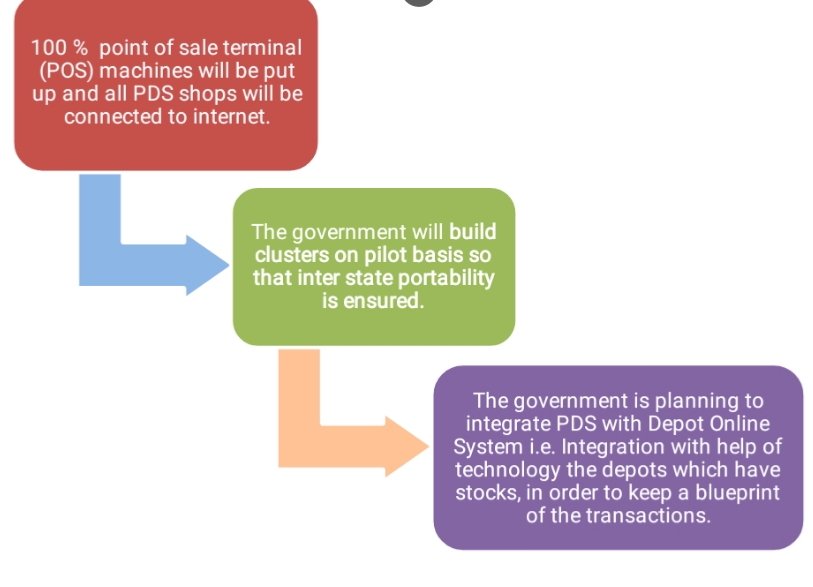
WHAT IS THE ONE NATION, ONE RATION SCHEME?
COVID-19 pandemic has caused havoc in the lives of people; the governments as well as the citizens are struggling to cope up with this crisis situation. But in the absence of basic income and food security one of the most affected classes is the one of migrants.
According to the 2011 census, there are 45 crore internal migrants who accounted for 37% of the population; it shows the gravity of situation in Indian scenario.
Thus, this scheme will be instrumental in the welfare of migrant workers and play a vital role in averting migrant crisis that exist today.
Finance minister Nirmala Sitharaman while announcing the scheme said that the scheme is expected to benefit 670 million people in 23 states.
RATIONALE BEHIND THE SCHEME:
IMPLEMENTATION OF THE SCHEME:
BENEFITS OF THE SCHEME:
-DEEKSHA CHUGH
WHAT WAS THE CASE ABOUT?
In the case of Triloki Nath Singh vs Anirudh Singh(D) thr. Lrs. & ors., the question that was addressed by the apex court was, “Whether the decree passed on a compromise can be challenged by the proceedings in a separate suit.”
A partition suit was filed in the year 1978 and after the decision of the trial court; the matter went in first appeal and eventually, in the second appeal before the High Court.
Thereafter an appeal was filed in the Supreme Court by Triloki Nath Singh against the order passed by the High Court which stated that the compromise decree dated 15th September, 1994 was illegal, inoperative and obtained by fraud.
FACTS OF THE CASE
The land in dispute originally belonged to Lakhan Singh who died leaving behind three sons, namely, Din Dayal Singh, Jalim Singh and Kunjan Singh.
Din Dayal Singh is said to have died issueless during lifetime of his father, while Jalim Singh died leaving behind a son Ram Nath Singh and two daughters Sampatiya and Soniya. Kunjan Singh is also said to have died issueless but prior to his death he gifted the land of his share to Sampatiya by a gift deed dated 10th July, 1978 which came in possession over her.
Salehari, claimed herself to be the daughter of late Kunjan Singh and filed a partition suit in the Court of Munsif, for setting aside the gift deed in the name of Sampatiya and for partition of her share in the ancestral property. That suit was dismissed and it was held that Salehari was not the daughter of Kunjan Singh and had no rights in the property.
Sampatiya sold a part of the said land to the appellant by a registered sale deed and the appellant was given the possession of the suit. When respondents interfered with the possession of the land it was found that the property was claimed on the strength of a compromise decree entered between Sampatiya and Salehari.
CONTENTIONS OF THE PARTIES
Appellants contended that the said compromise decree was obtained by fraud and misrepresentation. Also the salient fact that the compromise was executed between the parties was concealed and is liable to be declared as void. It was also submitted that Order 23 Rule 3A Code of Civil Procedure does not apply to strangers.
Respondents contended that the suit was not maintainable and was hit by Section 34 of the Specific Relief Act and Order 23 Rule 3A Code of Civil Procedure. It was also urged that the appellants had no right to obtain injunction and it was barred by section 52 of the transfer of property act. Also it was argued that Kunjan Singh didn’t die issueless and Salehari was his sole heir so the gift deed in favour of Sampatiya was never executed.
LEGAL PROVISION: Order 23 Rule 3A Code of Civil Procedure states that where the court is satisfied that a suit has been adjusted wholly or in part by any lawful agreement or where defendant satisfies the plaintiff in respect of the subject matter of the suit, the court shall order such agreement and pass a decree on whether the subject matter of agreement, compromise, or satisfaction is same as the subject matter of the suit. Where it is alleged by one party and denied by other that an adjustment or satisfaction has been arrived the court shall decide the question and no adjournment shall be granted, unless court thinks fit so to grant it. The provision further explains that the compromise or agreement shall not be deemed to be lawful if it is void or voidable under the Indian Contract Act, 1872.
WHAT THE COURT HELD?
The court stated that the substance of Order 23 Rule 3A is to avoid multiplicity of litigations.
Thus, creation of further litigation should never be the basis of a compromise between the parties. In the present case during the pendency of first appeal being continuation of the suit, Sampatiya allegedly entered into a sale deed with the appellant and thus, the issue regarding right, title and interest in respect of the land was still not finally decided.
The scope of Order 23 Rule 3 and 3A was considered by the court and it was held that, “Order 23 Rule 3A clearly bars a suit which the decree is based were not lawful. This implies that no sooner a question relating to lawfulness of the agreement or compromise is raised before the court that passed the decree on the basis of any such agreement or compromise, it’s that court and that court alone who can examine and determine that question. The court cannot direct the parties to file a separate suit on the subject for no such suit will lie inview of the provisions of Order 23 Rule 3A CPC to set aside a
decree on the ground that the compromise on which the decree was based was not lawful.”
The appellant was not a party to the compromise decree but claimed a right, title and interest over the land referred. Now, the appellant cannot be allowed to question the compromise decree passed by the High Court in the partition suit.
It was also observed by the Supreme Court that the suit was instituted in the year 1995 and after 25 years the court of appeal cannot interfere with the issue of right, title and interest of the suit property.
Consequently, the appeal was dismissed.
– DEEKSHA CHUGH
The Novel Coronavirus, Covid-19 is caused by the severe acute respiratory syndrome coronavirus-2 (SARS-CoV-2). It has been declared a pandemic by the World Health Organization and is an unprecedented worldwide health crisis. The extent of the ramifications caused is still unclear, but it is evident that the world has come to a standstill.
After the fourteen-hour Janata Curfew on Sunday the 22nd of March 2020, India’s Prime Minister has declared a nationwide lockdown of 21 days from March 25 to April 15 which was further extended to 3rd May 2020 and again to 17th May 2020 in order to contain the spread of coronavirus in India. So far we have been successful in limiting the numbers, but, as the possibility of community spread looms large, the authorities have been compelled to adopt stringent measures to prevent the massive outbreak. India with its vast population could be hit in the worst possible way, given our general standards of hygiene, clustered living habits and an ill-equipped and understaffed health care system. A vast majority of our gargantuan population lives in slums, in extreme proximity with one another providing the ideal breeding ground for epidemics such as Coronavirus that spreads from infected persons to those in the near vicinity.
Quarantine is a state of isolation in which people who are exposed to an infectious disease are placed for a fixed time, in order to curb the further spread of such disease. Coronavirus is highly contagious, that is why incoming travelers from corona hit countries and people coming in contact with Corona infected persons are being kept under observation to ascertain their medical status. However, we have had several instances of people avoiding health screening at airports, fleeing from quarantine, hiding their travel history and not following the rules prescribed for self-isolation by the concerned authorities. This is unfortunate as the irresponsible act of these people has jeopardized the safety of their family, friends and fellow countrymen. People are largely unaware of the existing laws under which they can be prosecuted for such actions that are detrimental to the health and safety of others.
QUARANTINE AND EPIDEMIC LAW ENFORCEMENT IN INDIA
One of the most pivotal segments of containment of public nuisance is the quarantine provision of IPC. Section 188, 269, 270, and 271 of IPC and Section 133 CrPC, assumes pivotal significance in the present scenario of the COVID-19 pandemic and lock-down orders Additionally, States may also issue orders by invoking Section 144 of CrPC, violation of which is also punishable under Section 188 of the IPC.
On March 11, the Cabinet Secretary of India enforced Section 2 ,Section 3 and Section 4 of the Epidemic Diseases Act in all states and union territories in India to control COVID-19.
This colonial law was historically applied in India to control cholera in Gujarat, malaria in Chandigarh, dengue fever in Delhi and swine flu in Pune. The application of the vintage law for containment of COVID-19 pandemic and control of the spread of the infectious disease is an interesting modern application. The officers entrusted with the responsibility of enforcing the orders or regulations enacted under the Epidemic Disease Act, 1897 shall be protected from prosecution for anything done by them in good faith towards the implementation of this law
Our quarantine or isolation laws are very mild in comparison to countries such as North Korea where military law was imposed to enforce a quarantine in the wake of coronavirus pandemic. It was reported that an official who returned from China was executed when he went to a public bath in violation of his quarantine. India has invoked powers under the Epidemic Disease Act, 1897 to control Covid19 As per this law whenever the country or any state or any part of the country or any state are faced with an imminent threat of the spread of any dangerous epidemic disease and the existing provisions of the ordinary law are insufficient to prevent its outbreak or contain its spread then It empowers the Central as well as State Governments to take necessary measures to prevent the outbreak or spread of such epidemic.
COVID-19 AND LABOUR LAW IN INDIA
As the economy struggles with the lockdown and thousands of firms and workers stare at an uncertain future, some state governments last week decided to make certain significant changes The most significant changes were announced by three BJP-ruled states — UP, MP and Gujarat — but several other states, ruled by the Congress (Rajasthan and Punjab) as well as BJD-ruled Odisha, too made some changes, although smaller in scope.
State-wise details of amendments in labour laws:
Uttar Pradesh: Yogi Adityanath has made the boldest changes as it summarily suspended the application of almost all labour laws in the state for the next three years. However, Building and Other Construction Workers Act, 1996; Workmen Compensation Act, 1923; Bonded Labour System (Abolition) Act, 1976; and Section 5 of the Payment of Wages Act, 1936 (the right to receive timely wages), will remain intact for both the existing businesses and the new factories being set up in the state. The state government’s statement said that the decision is taken in the wake of losses incurred to businesses and economic activities.
Madhya Pradesh: CM Shivraj Singh Chouhan has allowed overtime of up to 72 hours and the period of working shifts in factories to increase from 8 hours to 12 hours. In another major relaxation the state government said that there will be no inspection in the firms employing less than 50 workers and in the small and medium enterprises, the inspection will take place only with the permission of the labour commissioner or in case of complaint.
Rajasthan: Apart from raising the working hours from 8 hours per day to 12 hours per day, the state has amended Industrial Disputes Act to increase the threshold for lay-offs and retrenchment to 300 from 100 earlier. In order to recognise the trade union, the threshold membership of the trade union has been increased from 15 per cent to 30 per cent.
Maharashtra: All the shops and factories are asked to submit consolidated annual returns instead of multiple returns under various labour laws.
Kerala: Chief Minister Pinarayi Vijayan had said if the investor agrees to complete formalities in a year, the state government would facilitate new industrial licence within a week after the application is filed.
Punjab, Himachal Pradesh and Gujarat: These three states have also amended their Factories Acts in the last month to increase the work time to 12 hours every day and 72 hours every week, compared to 8 hours every day and 48 hours every week.
These are testing times. We all need to understand the magnitude of the catastrophe that awaits us if we disregard the precautionary measures mandated by the State. We all need to follow the rules prescribed for hygiene such as washing hands frequently, social distancing, wearing masks, using sanitizers, safe disposal of used tissues, staying indoors, self-isolation during sickness and reporting to the health care authorities immediately upon developing any symptom. More than laws and regulations, it is public support that can help
LEGAL PROVISIONS ATTRACTED IN THIS CASE
-KRITI SAKUJA
 Deeksha Chugh